

At the beginning of each year, I do a full-blown, whole-house cleanout. It’s a ritual at this point. And by the time fall rolls around, I start craving and really looking forward to doing this whole-house purge and organization refresh.
I actually started doing this back when we lived in San Francisco in our tiny 700-square-foot apartment. Since we were in such a small space and I was receiving PR products as an influencer every week, I used to do a full cleanout twice a year. Honestly, I could probably still benefit from doing it twice, but I just don’t have the time and motivation for it.
Now that we’re in a much larger, four-bedroom house in Napa, it’s definitely easier to just…shove things in a closet and keep moving. But by the time Thanksgiving rolls around, I’m craving that big reset. I can feel it in my body. I’m ready to purge, donate, recycle, toss, organize, and reclaim our space.
And we’re not talking about a couple of half-filled grocery bags. We’re talking multiple, large garbage bags full of donations and straight-up trash. It blows my mind every year how much unnecessary stuff accumulates without me realizing it. And now with Roman in the mix? Whew. The amount of baby clothes, gear, toys, and random little items that cycle out of our lives is unreal. There’s always something he’s already grown out of, used up, or moved past.
But once the whole-house cleanout is done, the shift is immediate. The house feels lighter. I feel lighter. My mind gets quieter in the best way. There’s something about starting the new year with clear space—physically and mentally—that makes everything feel possible again. It’s one of my favorite resets, and I look forward to it every single year.
Since I’ve been doing this January cleanout for probably at least a decade now, I definitely have a system and some tips to share on how to declutter your life.
Embrace this season of change and start the New Year refreshed and organized with my ten steps for minimizing clutter, inside and out.
1. Make a List (and Check it Twice)


Start by writing a list of every room in your house, including subcategories for any area that needs extra attention. For example, if you write down, “Kitchen,” follow it up with specifics like:
- Pantry
- Junk drawer
- Cabinets
- Spices
- Coat closet
- Refrigerator
Getting everything out of your head and into a planner instantly lightens the mental load—I promise!
Next, number your projects from highest to lowest priority. This will help you create a course of action to get things done in a reasonable timeframe.
And don’t put pressure on yourself to get it all done in one weekend. Work at your own pace and take it step by step.
What you decide to tackle first will depend on your personality. Some people prefer to get the hardest projects done first, while others start small for the satisfaction of an easy win. Look at it as a choose-your-own adventure!
2. Put it on Your Calendar and Call in Reinforcements
Block off days on your calendar to tackle each room. It’s tiring work, so if it’s a big job like our pantry, I might just tackle one room at a time. Get on the same page with your partner that this clean out is happening and figure out which space you’ll clean out together and which ones you’ll divide and conquer.
Since we have a kid now, we have to schedule these cleanout days for when he’s at daycare, or hire a babysitter on weekends. Planning these logistics out in advance helps ensure our house clean out actually gets done. And remember, it’s totally ok for this to take a while! We usually take the whole month of January to do it because we need to space things out.
3. Invest in Storage That You’ll Actually Use

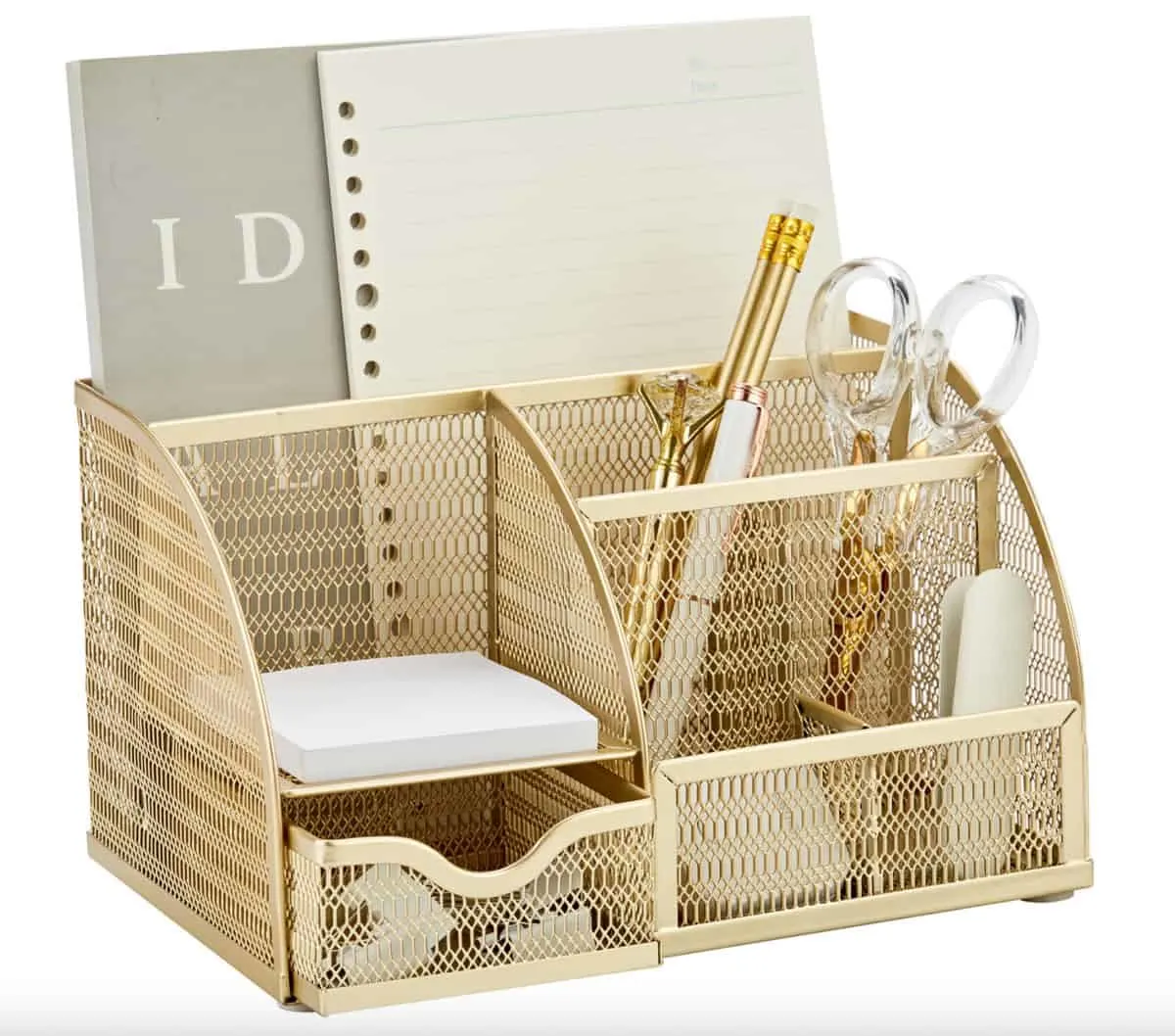
One of the biggest game-changers in keeping a home feeling calm and functional is investing in storage and organization that truly works for your lifestyle. I’m talking about the pretty storage boxes you won’t mind looking at every day, the drawer organizers that keep your underwear drawer from turning into a black hole, pantry bins that make cooking feel easier, and closet organizers for shoes, jewelry, bags—anything that tends to float around without a real home.
There’s something incredibly satisfying about getting everything set up in a way that makes sense. When every item has a place, maintaining a tidy space becomes effortless. You’re not “cleaning” so much as simply putting things back where they belong.
And the best part? Once your systems are in place, you’ll naturally stick to them because they make your life easier, not harder.
This is where function meets aesthetics—and where your space starts working for you instead of against you.
Here are a few of my favorite organizers:
4. Don’t Tie Your Emotions to Objects
Trust me, I know how easy it is to feel emotional about an object because it holds memories or represents a specific time in your life. But at the end of the day, stuff is just stuff.
It’s important to remember the things that matter most in life aren’t things at all. You won’t find your happiness, health, or support system tucked in the back of a drawer or gathering dust on a shelf.
As you sort through items, keep a donation box nearby and ask yourself: Do I genuinely love and need this, or did I forget it existed until just now? That answer will tell you everything you need to know about when it’s time to move on.
Letting go isn’t about loss—it’s about reclaiming your space and your energy.
5. Don’t Hold Onto Things Out of Obligation


Let’s talk about one of the sneakiest traps of all: keeping things out of guilt. I’ve been working on this myself, and I see my husband falling into it constantly. You know the drill—someone gives you a gift (maybe a colleague, a distant relative, or someone who means well but has a very different taste), and you feel like you need to keep it forever out of obligation.
Sometimes it’s something small, like a corporate holiday gift from a business associate you’ll never use. Other times it’s trickier—like a home decor piece from a family member that you…don’t exactly want hanging anywhere. And then there’s the mental spiral of, “But what if they come over and ask where it is?” Spoiler: they rarely do (and if they do, my move would be to play dumb—“Oh, I think we lost it during the move!”).
Here’s the truth I had to teach myself: keeping something you don’t like, use, or need doesn’t honor the giver—it just clutters your life. The gift already served its purpose the moment it was given. It was the thought that counted, and now it’s okay for that item to move on and actually be enjoyed by someone else.
Say thank you. Appreciate the intention. And then—let it go. You’re creating space for the things you love, not holding onto things because you feel pressured to. That’s where real freedom lives.
Approaching your New Year reset with a sense of gratitude makes it so much easier to let go of things you no longer need.
6. Watch Your Words
“I’ll keep it just in case…”
“I might need that one day…”
“I’ll leave this here for now…”
These phrases might feel harmless, but they’re a slippery slope to accumulating and hanging on to useless junk.
These phrases are signals. They’re holding patterns. Instead, try: “I’m ready to let this go,” or “I’m grateful for what this gave me, now I’m ready for something else.” Small habit shifts = big mindset shifts.
Being intentional about your everyday habits is key to stopping a mess from happening in the first place.
Instead of saying “I’ll set this down here for a minute,” stop what you’re doing to put the object where it belongs. It’ll only take a few seconds, and you’ll feel proud of yourself for keeping your space tidy and organized.
Making these small changes can seem silly, but they add up over time. By practicing these subtle shifts daily, you’ll minimize clutter and create a freer, more productive environment.
7. Stop Clutter in Its Tracks


One easy way to prevent clutter is to create a shopping list and actually stick to it. I know it’s tempting to wander the aisles and browse, but try to avoid filling your cart with unnecessary extras.
Another big shift I’ve been working on is stopping clutter before it even crosses the threshold. I’ve realized that so much of what ends up piling up in drawers and cabinets is things I never actually wanted in the first place.
A perfect example: swag bags. If I’m at an event and someone offers one and I already know I’m not going to use anything in it, I’ll just smile and say, “No, thank you.” If I’m traveling, I’ll blame the limited suitcase space—because honestly, it’s true.
But if I’m curious about what’s inside or I think there might be something I’ll want, I’ll take it home—but here’s the system. Before I even step inside the house, I go through the bag in the garage. If there’s something I genuinely want, great. Everything else goes straight into a donation box I keep out there. I don’t need another water bottle or another random trinket that will disappear into a drawer. The donation box gets dropped off at the end of every month, and that’s that.
This tiny habit has made such a difference. By stopping clutter at the door, I’m not giving it a chance to take root inside the house—and it keeps everything feeling cleaner and calmer without any extra work.
8. Create a New Closet System
Start the New Year on the right foot by reorganizing your closet from top to bottom. Once you find the right wardrobe setup, you’ll be able to keep things neat and avoid constant cleanouts.
Decluttering your clothes is just the first step—if you can’t keep them organized, you might slip back into your old habits and start hoarding things you don’t need.
Using a system like Modular Closets will maximize your storage space and make it easy to keep track of exactly what’s in your closet.
9. Have a Game Plan For Donations


Decluttering and choosing what is going to get donated is the first step, but then it can be easy to let donation bags and boxes pile up in your house, garage, or back of your car.
Have a game plan for how you’re going to handle donations to quickly get these items out of your house. Here are my go-tos:
- ThredUp: I absolutely love using ThredUp for my clothes. They will send you several huge shipping bags that you can fill up and send back to them, and they will list and sell your clothes for you. While the cut that you get isn’t high, you earn some extra cash, and you barely have to lift a finger. Plus, it feels good to know my clothes are getting a second life and being used by someone else.
- Just Between Friends: I’ve become obsessed with Just Between Friends, and I buy 90% of Roman’s clothing at these sales. They’re great community consignment shopping events for children’s clothing. To sell clothes/baby gear at a JBF, I always opt for partnering with a tagger (you have to hang the clothes on hangers, tag them appropriately, etc.), and we split the commission. Again, it’s not a huge money maker, but I’ll take $100 for basically doing nothing and just clearing out baby clothes/gear!
- Dress For Success: This is a great organization that helps unemployed women with programs and attire, and you can find a local chapter to donate to on their website. I love donating work-appropriate clothing here, and I recently found out they also take cosmetics, so this year I’ll be donating any unopened makeup I have in my PR drawers.
- Poshmark: I use Poshmark to sell items that I think I could make a lot more money from than just ~$10 from ThredUp. Obviously, this takes more time as I have to take photos and list the item myself, but for something like a Bumpsuit jumpsuit that I think I could sell for $80, it’s worth it. P.S. Code EMAA1 will add a $10 credit to your account for new customers.
10. Do a Full Digital Declutter
The amount of information, pings, and dings that we’re bombarded with daily can be ruthless. Email, Slack, TV, news, texts, social media…these near-constant distractions creep into our homes and our heads without us even noticing.
Physical clutter is one thing—but digital clutter can be just as loud. And when your tech feels chaotic, your brain follows. I’ve been doing a full digital cleanout as part of my yearly reset, and it honestly makes such a difference.
Handle your notifications. After watching The Social Dilemma, I turned off all Facebook push notifications, and it was the best decision. Instagram is part of my job, but even then, I keep notifications minimal. And I’ve turned off all news alerts—nothing hijacks your attention faster than a breaking-news banner popping up every ten minutes.
While you’re at it, unfollow or mute anyone on social media who drains your energy. If someone’s content makes you feel negative, insecure, annoyed, or exhausted—it’s your sign. You can mute people on Instagram so you don’t see their posts or Stories, while still technically following them. Protect your energy.
Lastly, clean out your notes, contacts, and photos. This one is weirdly satisfying. Go through the old notes you no longer need, delete duplicate contacts, and clear out random screenshots or photos that serve no purpose. And if your to-do lists live in five different places (been there), choose one source of truth. Mine is Asana. Anything urgent gets added to a small set of reminders on my phone. It feels grounding to know I’m not missing anything because I checked the wrong list.
Digital decluttering is one of those things that doesn’t take much time, but the mental clarity payoff is huge. When your tech is clean, your mind feels clean. And that’s the kind of energy we want going into the new year.


Elise Armitage is an entrepreneur and founder of What The Fab, a travel + lifestyle blog based in California. At the beginning of 2019, Elise left her corporate job at Google to chase her dreams: being an entrepreneur and helping women find fabulous in the everyday. Since then, she’s launched her SEO course Six-Figure SEO, where she teaches bloggers how to create a passive revenue stream from their website using SEO. Featured in publications like Forbes, Elle, HerMoney, and Real Simple, Elise is a firm believer that you can be of both substance and style.


